Principal Investigator
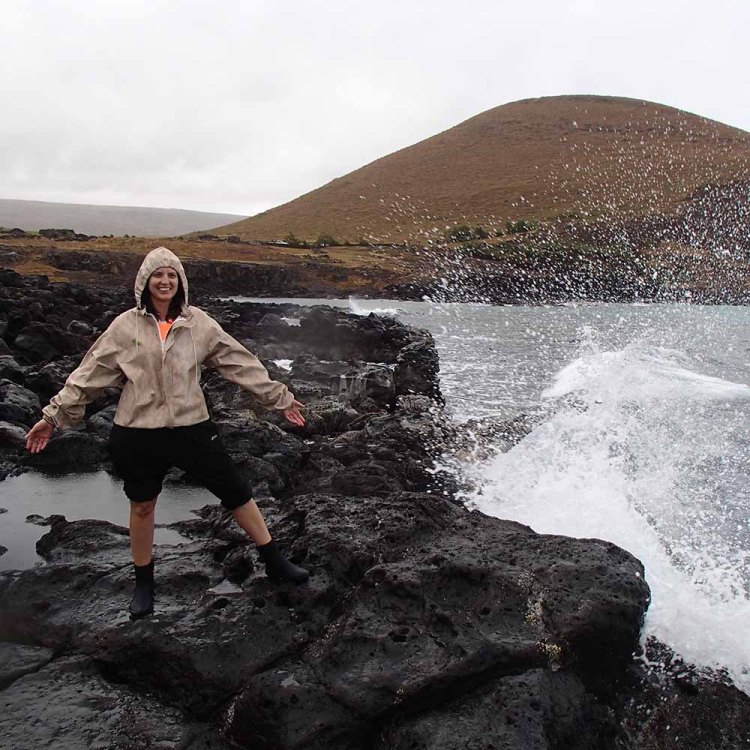
Erin E Easton, PhD, Biological Oceanographer
Assistant Professor at UTRGV in SEEMS.
I graduated from Indiana University with a BS in Biology and Florida State University with a MS and PhD in Oceanography. I spent three years as a postdoctoral scholar for the Ecology and Sustainable management of Oceanic Islands at the Universidad Católica del Norte in Coquimbo, Chile, where I conducted research on Rapa Nui and southeast Pacific Ocean benthic ecosystems. I then became a postdoctoral scholar with the Center for Coastal Ecosystems and Management (CCME) during which time I studied the systematics and biodiversity of octocorals in the Gulf of Mexico. My current research focuses on shallow to deep-sea benthic ecosystems from the shallow meiofaunal communities of the Bahia Grande to the mesophotic and deep coral ecosystems of the Gulf of Mexico and southeast Pacific.
I am seeking undergraduate and graduate students to work in the lab. If you are interested in joining the lab, email me your CV and statement of research interest.
Research interests: Benthic ecology and evolution with a focus on mesophotic and deep-sea soft- and hard-bottom communities and taxa.
Current Students
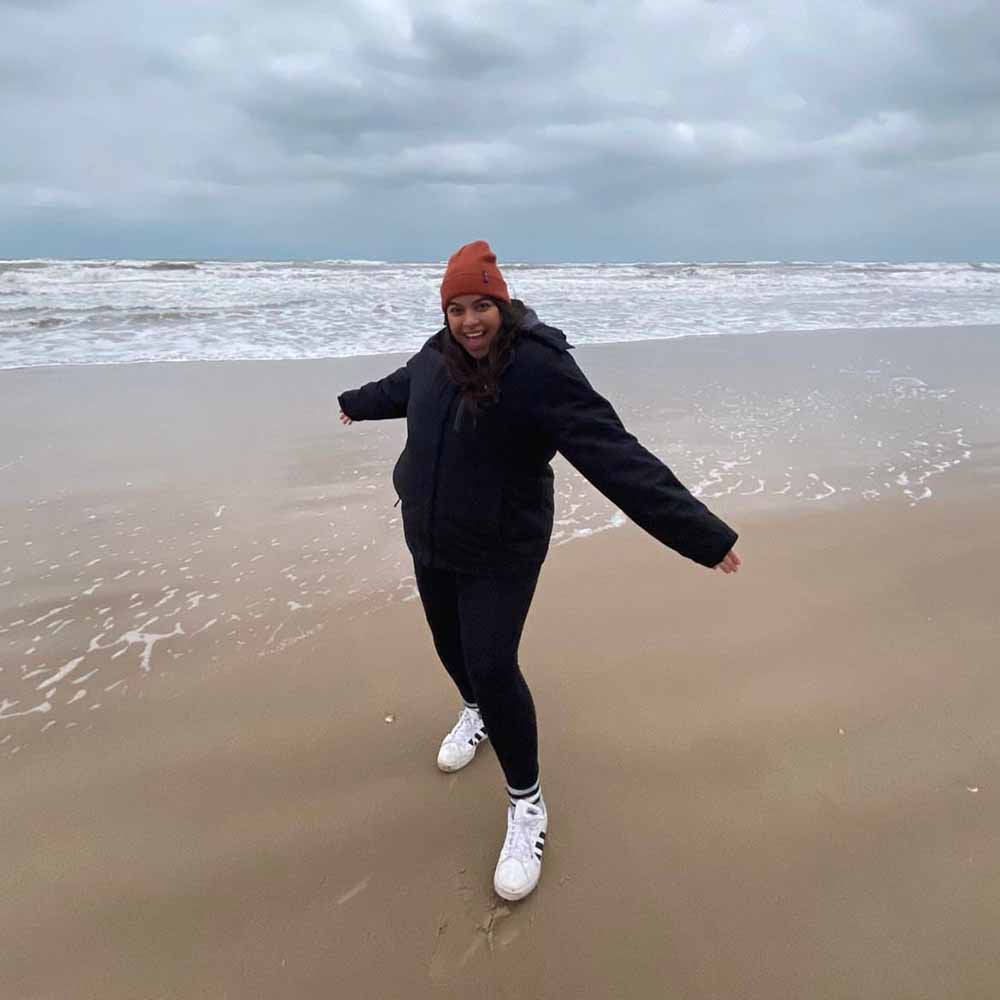
Katie Garcia, Agriculture, Environmental, and Sustainability Sciences Master of Science student
I graduated from Texas A&M University in 2021 with a BS in Wildlife and Fisheries Sciences with a focus in Rangeland, Wildlife, and Fisheries Management. While at TAMU, I was able to pursue a variety of interests within my field, ranging from sampling for fishes in the San Marcos River and zookeeping for exotic mammals, birds, and reptiles. It was through an internship studying Sergestid shrimps, however, that I found a deep interest and passion for marine invertebrates.
After graduating, I decided to move back home to the Rio Grande Valley to pursue an MS in Agricultural, Environmental, and Sustainability Sciences to get a better understanding of the environments I grew up in. My research is a comparison of meiofaunal assemblages found within top and second layers of sediment across a salinity gradient within the Bahia Grande. As one of the first meiofauna studies in this ecosystem, I’m excited to see the results of this study and how it may be used in the future to gauge further restoration on the area.
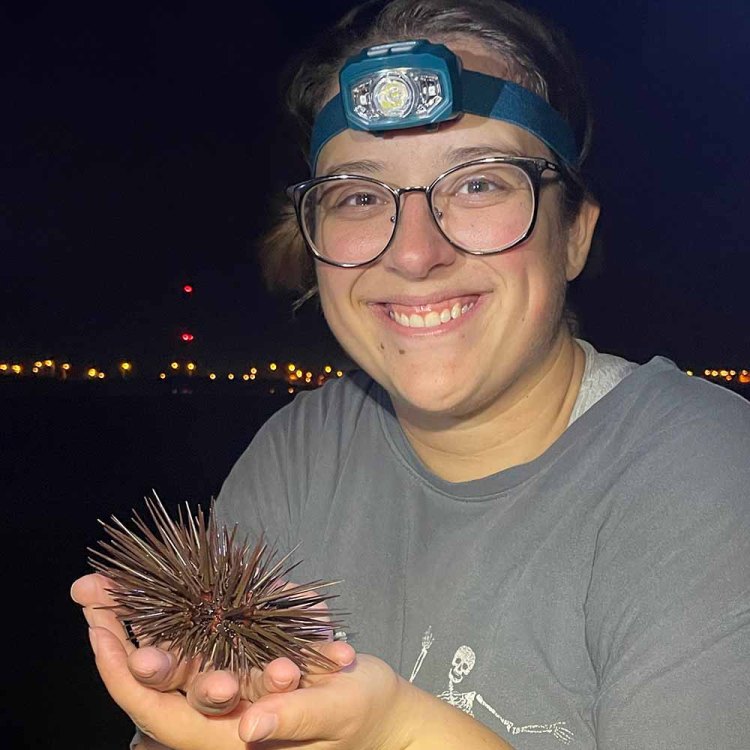
Emily Kornblum, Ocean, Coastal, and Environmental Sciences Master of Science student
I graduated from Harrisburg University of Science and Technology in 2018 with a focus on general biology. During my time at HU, I interned at Pennsylvania’s Department of Environmental Protection in their Vector Management Program identifying mosquito larvae and testing adult mosquitoes for West Nile Virus. After graduating, I interned for Mote Marine Laboratory and Aquarium in their newly formed Coral Health and Disease Laboratory. I then taught at the Community College of Baltimore County and worked at Eurofins doing PCR COVID testing. However, even as a child doing pond study at summer camp, I was always interested in invertebrates and biodiversity.
I found Erin’s lab online via the Texas A&M wildlife job board, and I was so excited to get back to environmental science! I am currently a MS student with the Ocean Coastal and Earth Science program at UTRGV working finding the biodiversity of meiofaunal organisms within the newly restored Bahia Grande estuary. There are not many studies on meiofauna as a whole, so I am excited to see the array of taxa within this ecosystem and use it for future research and restoration.
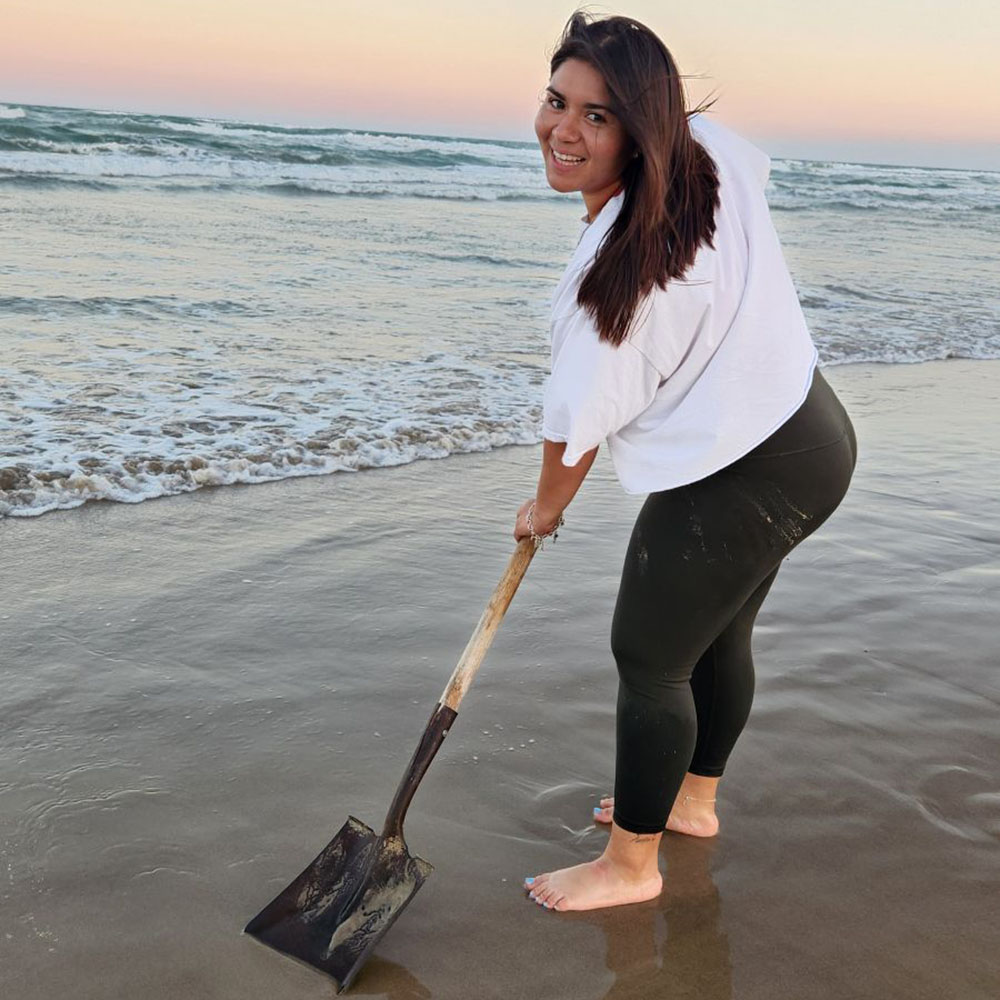
Nayeli Garcia, Ocean, Coastal, and Environmental Sciences Master of Science student
I graduated from the University of Texas Rio Grande Valley in 2024 with a bachelor’s degree in marine biology and a passion for marine botany, ecosystem dynamics, restoration and pretty much anything related to the environment. During my undergraduate studies, I got my hands dirty collecting marine debris data for NOAA, interning at Sea Turtle Inc. and worked as a research assistant. Excitingly, I got to jump into fieldwork, data interpretation, education outreach and conduct a unique project testing how invertebrates would behave and survive in a recycled glass cullet.
Just when I thought the adventure was over, an opportunity to become a NOAA CCME graduate research assistant supervised by Dr. Easton became available. Without a doubt, I applied and now here I am! My research is focused on octocoral morphology genetics in the Gulf. Octocorals are soft 3D structures found in mesophotic ecosystems that provide refuge, nutrients, and support biodiversity. However, there’s little to no research about their genetics. Being able to dive into a lesser-known area is a chance to be apart of new discoveries that can fuel species identification, map evolutionary relationships, and eventually track the environmental detriments. This is the beginning for me, but I’m excited to see where the road will take me within the systematics of octocorals close to home.

Sophie Scott, Ocean, Coastal, and Environmental Sciences Master of Science student
I graduated from Stephen F. Austin State University in 2024 with a BS in Environmental Science, focusing on biology and a second major in mass communications. During my time at SFA, I conducted environmental science and freshwater ecology research. I was able to gain field and lab experience, conduct international research in Guyana, and collaborate with community leaders. These experiences further instilled the love I have for the natural world around me and taught me the importance of the stewardship of science. After I graduated, I wasn’t sure what I wanted to do, but I knew I wanted to be of use to the environments I love.
Although most of my research experience has been in freshwater ecology, I’ve always been an ocean nerd. Knowing this, my friend forwarded me this graduate position in Dr. Easton’s lab. My research is focused on optimizing the growth of black corals (Antipathes atlantica and Stichopathes luetkeni) in aquaculture and field growth-out for future restoration efforts in the Gulf. These species displayed injuries after the Deepwater Horizon Oil Spill in 2010 and are a main concern of Gulf restoration efforts. I also aim to develop outreach and educational programs related to black corals, growth, conservation, and ecology. I am so excited to be working in mesophotic ecosystems, pursuing an MS in Ocean, Coastal, and Earth Sciences at UTRGV. As there is much left to restore and even more left to learn, I am thrilled to be continuing my education and contributing to marine restoration efforts.
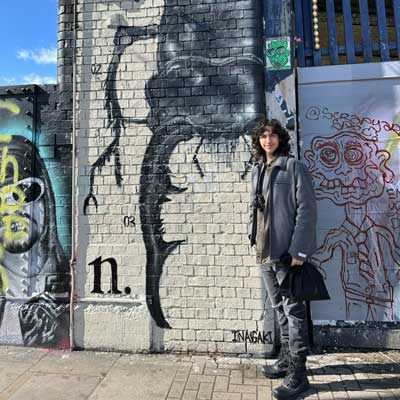
Pedro Solis, Environmental Sciences Bachelor of Science student
Hello, I am an undergraduate at UTRGV majoring in Environmental Sciences. I am passionate about biology and love consistently learning about it, though insect/arthropod biology are the areas I’m most interested in and intend to specialize in. Before working at Dr. Easton’s lab I briefly assisted on a project focusing on paleoenvironmental reconstruction using Crassostrea gigantissima as a model fossil to extract isotopes from them. I was excited to join Dr. Easton’s lab because of the research on invertebrates and meiofaunal arthropods and learning about crustaceans is important to me. At the time of writing this, I will begin an REU Entomology program, working in a lab that specializes in orthoptera and phasmid systematics.
I hope to pursue further education and earn my MS and PhD in entomology or biology. I have no idea where life will lead but I know that I am excited to continue learning more.
Other students
- Elyssia Gonzalez, Ocean, Coastal, and Earth Sciences Master of Science Student, 2023-
Former Students
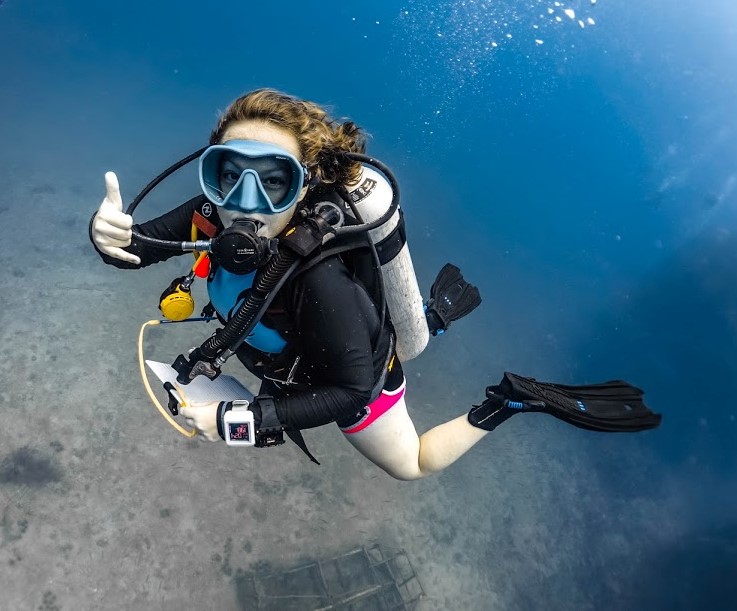
Kara Eckley, MS in Ocean, Coastal, and Environmental Sciences, December 2022
I started studying ecology at Seattle Pacific University and have been focused on marine ecology and conservation for some time now. I graduated in 2019, after having the chance to take courses in the Galapagos Islands, as well in the San Juan Islands in Washington State. After my graduation, I took a gap year to travel and complete my divemaster’s training in Thailand, along with an internship in marine conservation. During this time, I was able to conduct a study on the diversity of a local shipwreck and assist with assessments of fisheries around the time of the coronavirus lockdown event.
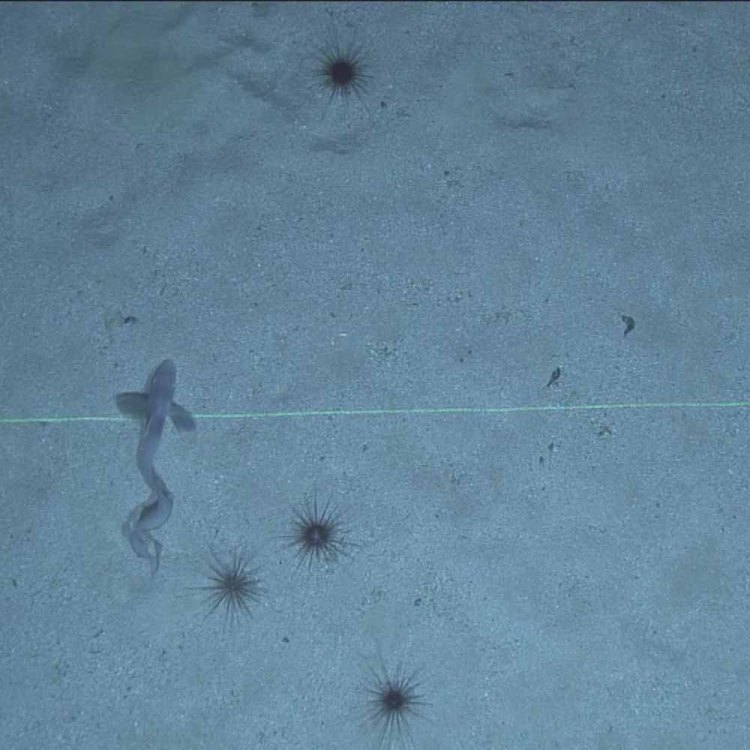
I am currently in my first year of pursuing my MS in Ocean, Coastal, and Earth Sciences at UTRGV. I am studying the benthic community composition of seamounts near Easter Island, using video, environmental, and genetic data collected from a research cruise in 2019. I hope to look at the effects of environmental factors such as depth, substrate type, and slope on changes in community composition.

Ted Gniffke, MS in Ocean, Coastal, and Environmental Sciences, August 2023
I graduated from Western Washington University in 2016 with a BS in Cell & Molecular Biology and a minor in Economics. After graduating I spent time working in biotech, volunteering with the National Park Service on sea turtle conservation and working as a research associate studying neuroscience and COVID-19. After gaining experience in these roles, I realized that my true passion for research was at the intersection of molecular, marine, and conservation biology.
I am in my first year of the Ocean, Coastal, and Earth Sciences MS program at UTRGV and am a NOAA CCME Scholar. My research is focused on characterizing the microbiomes of octocorals from mesophotic reefs in the Western Gulf of Mexico using 16s rRNA sequencing. Additionally, I hope to take part in work aimed at better characterizing the diversity of poorly understood Scleracis spp. in the region. My hope is that this work will lend to greater management and conservation outcomes for these understudied yet foundational ecosystems.
Other students
- Joaquin Zamarripa, High Scholars Student, Summer 2024
- Kylie Villarreal, NSF LSAMP Summer Program, Undergraduate, Summer 2023
- Mac Franklin, Student Experience Intern in Website Management, 2022-2023
- Jazmin Torres-Roman, BS in Biology, May 2023, research assistant in lab 2021-2022
- Mike Salazar, High Scholars Student, Summer 2021
 Benthic Ecology and Evolution